Posts

Citizen Participation in Planning the City

Image
A very significant paradigm shift is required in India if Citizen Participation is going to be a meaningful exercise in urban planning!  And why not? After all, the city is for the people and they are the major stakeholders in expressing and planning for what they want from their neighborhoods. This movement of involving citizens in key and traditionally governed areas like Urban Planning saw a basic shift in western countries in the 1980s and gained strength in the 1990s. Starting from sharing of information to seeking opinion, then stakeholder participation to citizen empowerment has been a journey that has shifted the way city planning happens. Here the mayor and the elected representatives actually play a very key role in giving voice to the citizens, their concerns and opinions. However, for Indian cities to see this shift, we will need a major overhaul of the Development Planning process. In Maharashtra, the urban planning is governed by the Maharashtra Regional and To...

Chaos of the Voter Lists - General Elections 2014

Image
Faith of the Indians in democracy is seen at its highest when India votes in the General Elections of 2014. In the past month, as the election campaign has reached its zenith, in terms of their pitch, the 'Yes! I will vote' movement has also gained considerable popularity. And through both, the individual election campaigns of the candidates and the voter awareness campaigns, India wants to - no, was looking forward to, casting its vote in the 5 phases of voting spanning across its boundaries. And it was truly a Dance of Democracy! In the first phases, encouraging voter turnouts to as high as 85% in the North East propelled peoples' imaginations and everyone eagerly awaited the day when they could cast their vote, elect their leader and be a part of the system that forms our government. But the reality of the system that allows citizens to cast their votes was rudely inept, inefficient and grossly mismanaged when 121 constituencies of India went for vote on ...

Metro & 4 FSI in the Metro Influence Zone: What it will mean to Pune?

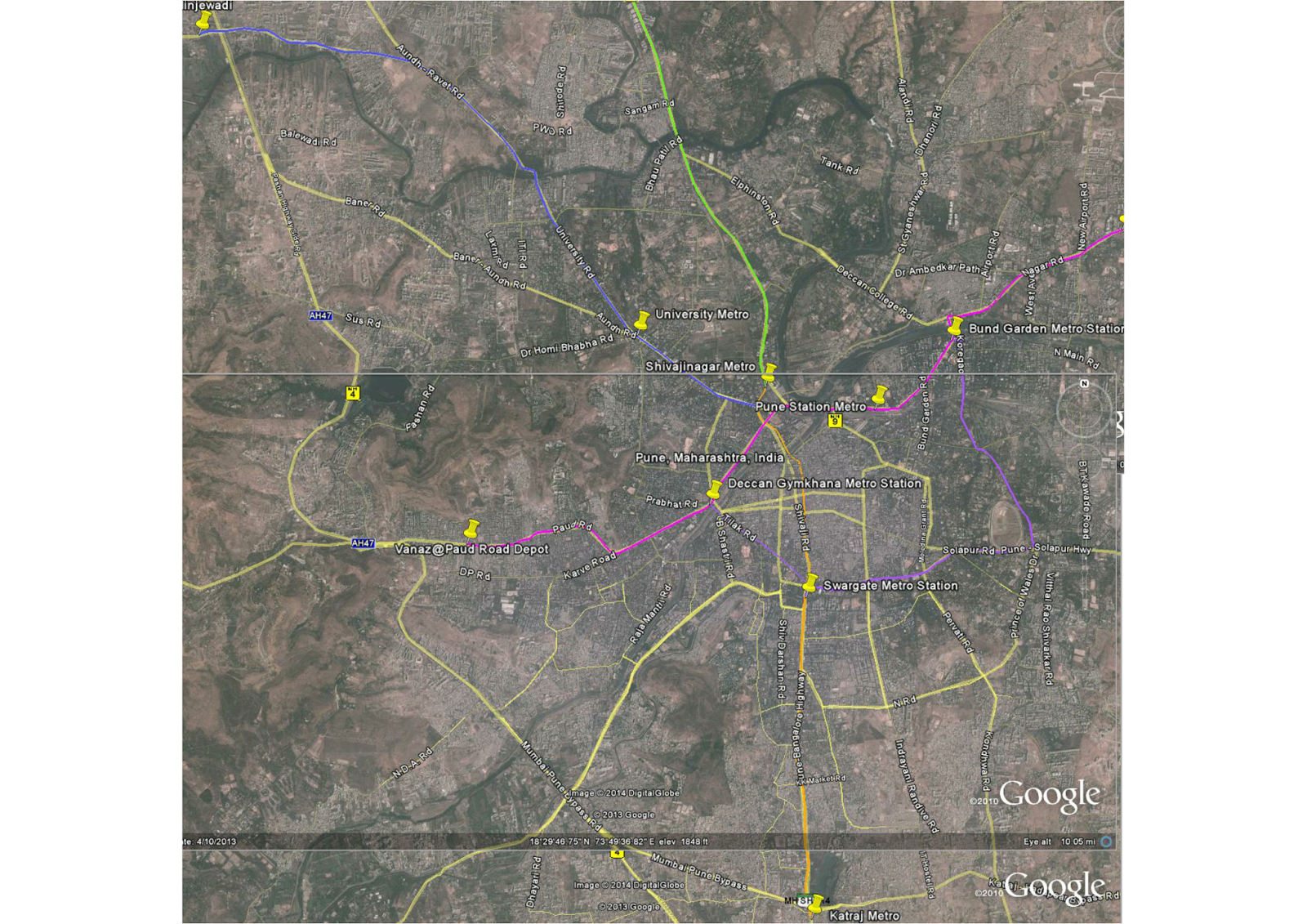
Since my blog last week, I have further gone into an analysis of the 4.0 FSI in the Metro Influence Zone. We have to realise that its not a matter of just becoming accustomed to a massive serpentine elevated track in the city, but it means a huge social upheaval. Just see the numbers below and I wonder if you will back the current Metro funding proposal. And all I ask is whether in-depth studies and estimates are carried out behind the proposed policies or are 4.0 FSI provisions just floated without understanding or estimating its social impact and costs? 1. The current length of the Pune Metro within the core city area is 57.58 km. 2. Considering the 500 m on both sides, the Metro Influence Zone will be 57.58 sq km. 3.  This equals to  14230.57 acres of Metro Influence Zone  in Pune city core As per the Development Plan, the provisions of the Metro Influence Zone are applicable to Residential and Commercial zoned properties, which is approximately 40% of the total...

Pune Metro and its impact on Raising the Cost of Living in Pune

Image
The latest addition, amongst numerous other reports on the Metro, includes the Lohia Committee Report. Since Metro is proposed in cities of India, considerable thought seems to be now going into (albeit being very late) on 'how to really finance this monster infrastructure?' In 2009, a very rosy picture was placed in front of the urban citizens that this glamorous, silver, shiny Metro will be adequately financed using State and Centre funds, supplemented only marginally by Local Municipal Corporation funds and actual ticket fares. The Lohia Committee report, as it reads today, seems like the government ready to do a backflip on this promise. The Report begins by saying that the financial burden incurred by a Metro is not justified for availing high international loans as huge amounts will be spent in servicing the interest on these loans. Further, the State and the Centre has limited capacity to provide grants to such infrastructure development. On the other hand, the report...

48% voter turnout in Pune Vs 90% voting in Bhugaon

With the recently concluded elections in Bhugaon (a village 5 km away on the western fringe of Pune), it was heartening to see a more than 90% voter turnout. Last Sunday I witnessed the entire village out on the streets since morning, queuing up to cast their votes. The spectacle really made me think. Who are really the custodians of a robust democracy that India boasts about? The villagers, who have been relegated to the back with tags like 'uneducated', 'poor', 'illiterate' were all "literate and socially aware" to come out of their homes on a Sunday morning and participate actively in making of the government in their own small and meaningful way. While, the residents of cities tagged often as 'the educated, urbane intellectuals', want to enjoy the holiday meant for elections out of the city. Does this mean that the so called intellectuals have given up on democracy? Or are they educated but socially illiterate? Are they so ensconced in t...

"India constantly repeats its two mistakes"... Harvard Business Review Article says

Image
Today I plan to take a brave step and hope to begin writing about some of the larger issues, concerns, debates and opinions on India and her policies and I thought the blog is now ready to move away from only the Pune centric issues and graduate to express my thoughts on India. I hope you will enjoy and continue reading. A recent Harvard Business Review article suggests that "India fails because it repeats its mistakes". India, which was, at the beginning of this century, a focal point for the entire world, suddenly seems to have lost its sheen. When the entire world was looking towards India, and wanted it to succeed, 'our train' derailed and missed the point where we were all traveling. Numerous studies, articles, theories and debates have emerged on this single most, yet the most pressing issue for India and the world. In Shashi Tharoor's words, the World wants India to succeed and that was very evident in the early 2000s when India seemed to embr...

Do Subways, for pedestrian crossing, make sense in Indian cities?

Image
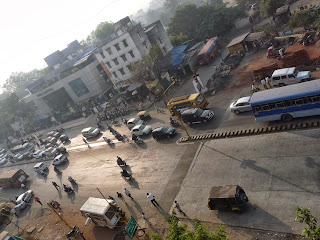
The Bhusari Colony Bus Depot Junction on Paud Road where the Subway Pedestrian Crossing is proposed. I am confronted with a dilemma since last week. A subway proposal has been proposed for the Kothrud Bus Depot junction on Paud Road and I have been asked to comment on its design! Keeping in character of not staying within my scope, I have started raking up too many unasked and unanswered questions. And why not? After all, it is my hard earned tax money that will end up in making this subway. On the face of it, the subway proposal is a great political project - its gives visibility, it is in tune with the principles of sustainability, it promotes safe pedestrian movement and hence indirectly promotes walkability in a city; it represents social equity and it targets the heart of voters by making road crossing safe for school children (and hence woos mothers) and senior citizens. Pedestrian choose to cross taking risks despite presence of a pedestrian crossing bridge ....